

Short answer: Your Labrador puppy first week at home is about calm routines, not perfection. Keep the same food the breeder used, set up a crate in a quiet spot, take your puppy out often, book a vet visit, and let them rest. Expect tired, clingy, and a bit overwhelmed puppy behaviour at first, with a few accidents and short nights.
ASK ABOUT A LAB PUPPY VIEW AVAILABLE PUPPIES
Bringing home a Lab puppy is exciting, and a little overwhelming for everyone, including the puppy. At eight weeks old, your new family member has just left their mother and littermates, and everything is new: the smells, the sounds, the floors, the people. The first week sets the tone for the months ahead, but you don’t need to do everything right. You just need to be patient, consistent, and gentle. This guide walks you through the first day, the first night, feeding, potty training, the vet, chewing, and what to expect day by day. It is general information, and your vet is the best source of advice for your own puppy.
What Should You Do Before Your Puppy Comes Home?
Preparation makes the first week far smoother. Before pickup day, set up a crate or playpen in a quiet spot, buy the same food your puppy has been eating, and get bowls, a collar, a leash, safe chew toys, and cleaning supplies for accidents. Puppy-proof your home by moving cords, shoes, plants, and small objects out of reach.
Ask the seller for your puppy’s records, feeding schedule, and what time they last ate. Our Labrador puppy buying checklist covers a full preparation list, and our guide to Labrador puppy health records explains what paperwork to expect. Book a vet appointment for the first few days, and plan to be home as much as possible during the first week.
What Should You Do the First Day a Puppy Comes Home?
Keep the first day calm. It’s tempting to invite everyone over, but a quiet start helps your puppy settle.
- Take the puppy to the bathroom spot first. Go straight to a chosen outdoor spot, wait a few minutes, and praise when they go.
- Let them explore, with supervision. Show them the main area, the water bowl, and the crate.
- Keep visitors to a minimum. Introduce family members one at a time and keep things gentle.
- Offer small meals and water. Stick to the food the puppy has been eating.
- Schedule naps. Puppies sleep a lot, often 18 to 20 hours a day, and need rest between short bursts of play.
- Take them out often. After waking, eating, drinking, and playing, and about every hour or two at first.
My puppy isn’t pooping on the first day. What should I do?
Don’t panic. Stress and a new environment can slow things down. Keep offering regular bathroom trips and a consistent routine. If your puppy hasn’t pooped after a day or two, seems unwell, refuses food, vomits, or seems in pain, call your vet.
Where Should a Puppy Sleep the First Night?
Most puppies do well in a crate or bed in a quiet spot close to you, such as your bedroom or the room next door. Being nearby helps your puppy feel safe, and lets you hear when they need to go out. Make the crate cozy with a blanket, a safe chew toy, and a worn T-shirt that smells like you.
Should I crate my 8-week-old puppy for the first night?
Many families do, and a crate can help with house training and safety. Make it a positive place: feed meals there, offer treats, and never use it as punishment. Puppies can’t hold it all night, so plan to take your puppy out once or twice, and keep those trips quiet and boring.
Can a 9-week-old puppy sleep through the night?
Most can’t yet. Young puppies usually need one or two bathroom breaks overnight, and the stretches get longer as they grow. Expect some crying at first, and respond calmly, without making it a party.
What Should You Feed a Labrador Puppy in the First Week?
The best choice for the first week is the food your puppy was already eating. A sudden change can upset a young stomach, so ask the seller for the brand, the amount, and how often your puppy eats. Once your puppy has settled, ask your vet which food to switch to, and make that change gradually over about seven to ten days, mixing a little more of the new food each day.
What type of puppy food is best?
- Choose a food labelled as complete and balanced for growth or for puppies.
- Labs are a large breed, so many vets recommend a large-breed puppy formula, which helps support steady growth.
- Avoid giving extra calcium or supplements unless your vet recommends them.
- Follow the feeding guide on the label as a starting point, and adjust with your vet to keep your puppy lean.
We don’t recommend specific brands, because the right food depends on your puppy and your vet’s advice. If you’re comparing options, ask your vet what they suggest for a Lab puppy.
How often and how much should a puppy eat?
Young puppies usually eat three or four small meals a day, spaced evenly, and move to fewer meals as they grow. Portion size depends on the food, your puppy’s weight, and activity, so follow the label and your vet’s advice. As an example, a five-month-old Lab typically eats a few measured meals a day, but the amount varies. Weigh and measure food instead of guessing, since Labs gain weight easily.
Foods to keep away from your puppy: chocolate, grapes and raisins, onions and garlic, xylitol (an artificial sweetener found in some gum and peanut butters), and cooked bones. Keep human food off the table and out of reach.
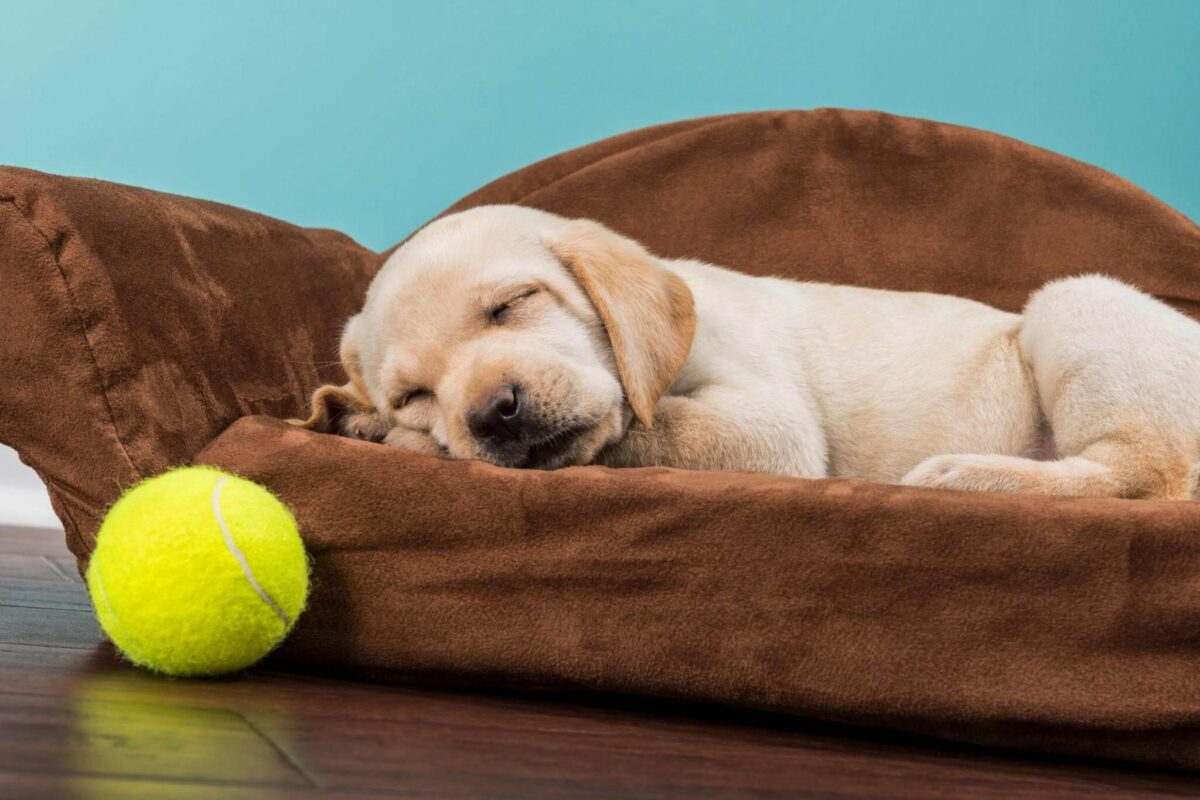
What Does a Labrador Puppy’s First Week Look Like Day by Day?
| Day | Focus | What to do |
|---|---|---|
| Day 1 | Settling in | Quiet introductions, bathroom trips, short naps, the same food, crate near you at night. |
| Day 2 | Routine | Set regular meal, bathroom, play, and nap times. Start gentle handling of paws and ears. |
| Day 3 | Names and manners | Teach their name with treats. Reward calm behaviour. Redirect nipping to toys. |
| Day 4 | Vet visit | Bring all records. Ask about vaccines, parasite prevention, and food. |
| Day 5 | Crate and alone time | Practise short, calm separations, starting with a few minutes. |
| Day 6 | Safe socialization | Introduce a few new people, sounds, and surfaces, calmly and at home. |
| Day 7 | Review | Notice what’s working, adjust the routine, and keep the next week’s goals small. |
How Do You Start Potty Training in the First Week?
Start from day one, and expect accidents. Puppies can’t hold their bladders long, so the key is frequent opportunities and lots of praise.
- Take your puppy out first thing in the morning, after every meal, after naps, after play, and before bed.
- Use the same spot and a simple cue like “go potty.”
- Reward immediately with praise and a small treat.
- Supervise indoors, and watch for sniffing, circling, or heading to a corner.
- Clean accidents with an enzyme cleaner. Never punish your puppy afterwards, since they won’t connect it to the accident.
When Should Your Puppy Visit the Vet?
Book a first checkup within the first few days, even if your puppy seems perfectly healthy. Bring every record, including vaccinations, deworming, and the contract if the guarantee requires a vet exam within a set time. Ask about the next vaccines, parasite prevention, food, and when to spay or neuter. The Canadian Veterinary Medical Association offers pet owner resources, and you can read our health guarantee page for how ours works.
Can I take my 9-week-old puppy for a walk outside?
Ask your vet first. Until the vaccine series is complete, avoid public places where other dogs have been, such as parks and sidewalks with lots of dog traffic. Your own yard and other safe, private spaces are usually fine for short, supervised outings. You can carry your puppy to meet new sights and sounds.
How Do You Handle Chewing, Teething, and Biting?
Puppies explore with their mouths, and Labs are especially mouthy. It’s normal, and it’s not aggression. The goal is to teach what they can chew, not to stop chewing altogether.
- Keep safe chew toys handy and swap them out to keep them interesting.
- When your puppy bites you, calmly stop playing, offer a toy, and praise when they take it.
- Give a short break if they get overexcited. Tired puppies bite more.
- Offer chilled (not frozen solid) chew toys for sore gums.
- Puppy-proof your home, and use gates or a playpen when you can’t supervise.
Should I tap my puppy on the nose when he bites?
No. Hitting or tapping a puppy can frighten them, damage trust, and sometimes make biting worse. Redirect to a toy, calmly end the play, and reward gentle behaviour instead.
What is the teething timeline for a Lab puppy?
Puppies have 28 baby teeth, which usually start falling out at about three to four months, replaced by 42 adult teeth by around six or seven months. Chewing is often worst during that stretch. Call your vet if you see retained baby teeth or heavy bleeding.
How Much Sleep and Alone Time Does a Puppy Need?
Puppies need a lot of sleep, often 18 to 20 hours a day, in short stretches. Build in regular naps in the crate or a quiet space, and don’t wake a sleeping puppy. Start practising short periods alone from the first few days, with a calm goodbye and return, to help prevent separation anxiety.
Can I leave my 8-week-old puppy alone for 3 hours?
That’s too long for most puppies this age. A rough guide is about one hour per month of age, so a young puppy usually needs a break every couple of hours during the day. Plan to be home, or arrange help, during the first week.
How Do You Socialize a Puppy Safely?
The first weeks are a prime window for learning that the world is safe. Introduce new people, sounds, surfaces, and gentle handling in small, positive doses, without overwhelming your puppy. Keep it short, offer treats, and stop if they seem fearful. Until your vet confirms vaccinations are complete, socialize at home, with healthy, vaccinated dogs you know, and in safe private spaces.
How Big Is a Lab Puppy at 8 Weeks?
It varies a lot by litter and sex, but many Lab puppies weigh roughly 10 to 15 pounds (about 4.5 to 7 kg) at eight weeks, and somewhat more by ten weeks. Healthy puppies grow quickly, and your vet can track your puppy’s growth against a chart. Don’t try to speed it up with extra food, since steady growth is better for the joints.
Do Labrador Puppies Shed?
Yes, and all Labs shed year-round. Puppies shed a little, and the heavier shedding often begins when the adult coat comes in. Adult Labs shed the most in spring and fall. A brush once a week helps. Patchy hair loss, itching, or skin redness is not normal shedding, so see your vet if you notice it.
What Is the 3-3-3 Rule for Puppies?
It’s a rough guide to settling in: about three days to feel overwhelmed, three weeks to learn the routine, and three months to feel at home. Every puppy is different, so be patient. For a deeper look at the breed, see our complete Labrador Retriever breed guide.
What is the hardest age for a Lab puppy?
Many owners find the teenage stage, roughly six to eighteen months, the hardest. Puppies are big and strong but not yet mature, and they test limits. Consistent training and daily exercise help a great deal.
What is the 5-minute rule for Labradors?
It’s a guide for young puppies: about five minutes of structured exercise for each month of age, twice a day, to protect developing joints.
What Is a Realistic Puppy Training Timeline?
- Weeks 8 to 10: name, house training basics, crate comfort, gentle handling.
- Weeks 10 to 16: sit, down, and come, with more socialization and short walks after vaccines.
- Months 4 to 6: leash manners, impulse control, and managing teething and chewing.
- Months 6 to 18: reinforce everything through the teenage stage, with consistent rules and exercise.
Frequently Asked Questions on Labrador puppy first week at home
What are the best dog food options for a Labrador puppy’s first week?
Keep your puppy on the food they were eating before they came home. Choose a complete and balanced puppy food, ideally a large-breed formula, and change foods gradually over seven to ten days once your puppy has settled. Ask your vet to recommend a specific food.
What are the disadvantages of a Labrador Retriever?
Labs shed a lot, need plenty of daily exercise, chew when young, gain weight easily, and don’t like being left alone for long. They’re a wonderful match for active families, but not for a low-effort household.
What age is a puppy chewing the worst?
Often between three and six months, when adult teeth are coming in. Provide plenty of safe chews, supervise, and puppy-proof your home.
Are boy or girl Labs easier?
There’s no reliable rule. Personality, training, and consistency matter far more than sex.
Do Labs like to sleep with their owners?
Many do, because they’re people-focused dogs. Whether your puppy sleeps in the crate, your room, or your bed is up to your household rules.
Why is my Labrador losing so much hair?
Labs shed heavily, especially in spring and fall. But patchy loss, itching, or red or flaky skin should be checked by your vet.
How many teeth do puppies lose?
Puppies lose all 28 baby teeth as 42 adult teeth come in, usually between about three and seven months old.
Can three-week-old puppies go all night without eating?
Puppies that young still depend on their mother, and shouldn’t be away from her. Puppies generally should stay with their mother and littermates until at least eight weeks old. If you have a very young puppy, ask your vet for advice right away.
Getting Ready for a Labrador Puppy?
We’re happy to answer questions about getting started. Contact us to ask about a puppy, or browse our available Labrador puppies.
CONTACT US VIEW AVAILABLE PUPPIES
