

Updated October 2026 | Reading time: about 10 minutes
Short answer: Labrador puppy health records should include vaccination dates, deworming history, any veterinary examination, microchip details if the puppy has one, and information on the parents’ health testing. You should also receive a written contract with the health guarantee, and registration papers if the puppy is sold as registered. Ask to see them before you pay.
ASK ABOUT A LAB PUPPY VIEW AVAILABLE PUPPIES
Buying a puppy is exciting, and it’s easy to focus on the photos. But the paperwork tells you far more about how a puppy has been cared for than a cute picture ever can. This guide explains every record you should expect, what each one means, how to check that it’s genuine, and what to do if something is missing. It is general information, not veterinary advice, and your own veterinarian is the best person to review your puppy’s records.
What Health Records Should Come With a Labrador Puppy?
Here is the short list. The sections that follow explain each item in detail.
| Record | What it shows | What to look for |
|---|---|---|
| Vaccination record | Which vaccines the puppy has had and when | Dates, vaccine names, and the clinic or vet who gave them |
| Deworming record | Treatment for intestinal parasites | Dates and the product used |
| Veterinary exam | A professional check of the puppy’s health | Date, vet’s name, and clinic |
| Microchip details | Permanent identification, if applicable | Chip number and who registers it |
| Parent health testing | Screening of the parents for inherited conditions | Actual results, not just a claim |
| Registration or pedigree | Parentage and ancestry, if sold as registered | Registry name and certificate details |
| Contract and health guarantee | What the seller promises and what you must do | Terms in writing, signed by both sides |
| Feeding and care notes | What the puppy eats and how it’s been cared for | Food brand, amounts, and schedule |
Not every seller will have every item, and some depend on the puppy’s age. What matters is that the seller is open about what exists, what doesn’t, and why.
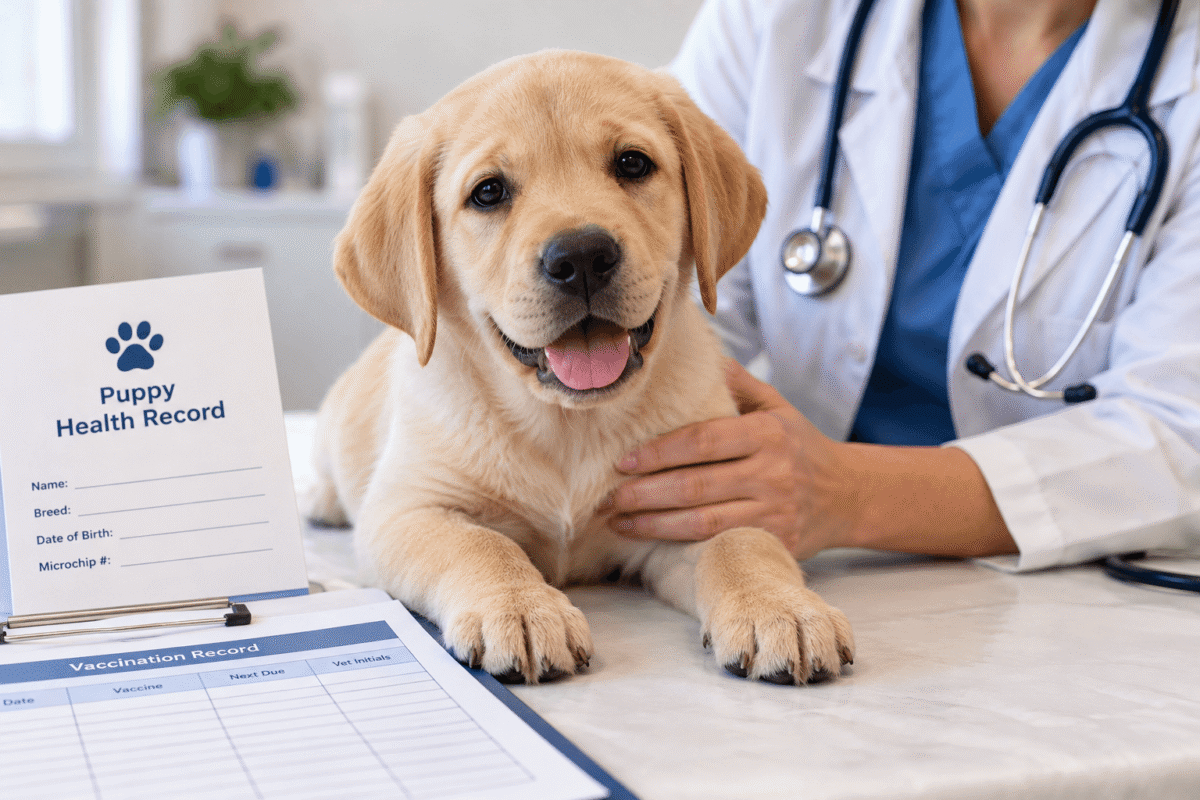
Vaccination Records
A vaccination record shows which vaccines your puppy has received and on what dates. Puppies are protected at first by antibodies from their mother, and that protection fades, so vaccines are given in a series. Core puppy vaccines usually protect against distemper, parvovirus, and adenovirus, and rabies vaccination comes later. Exact schedules vary by veterinarian and region, so don’t expect every puppy’s record to look identical.
Look for the vaccine names, the dates, and the name of the clinic or veterinarian who administered them. A handwritten note that says “vaccinated” with no dates isn’t enough. The World Small Animal Veterinary Association publishes vaccination guidelines that veterinarians use worldwide, and your own vet will tell you when the remaining shots are due.
The record should leave you with a clear picture of what the puppy has had and what’s still to come. Ask the seller when the next vaccine is due so you can book your first veterinary visit at the right time.
Deworming Records
Puppies commonly carry intestinal worms, such as roundworms, often passed from the mother, so deworming is a routine part of early puppy care. A good record lists the dates and the product used. Puppies are typically treated more than once in their first weeks, and your vet may recommend a follow-up. The Companion Animal Parasite Council provides parasite information for pet owners.
If your puppy has been dewormed, ask when it was last done, and bring that record to your first vet visit. Your vet may also suggest a stool test to check for parasites that routine deworming doesn’t catch.
Veterinary Examination Records
A veterinary exam means a licensed vet has looked over the puppy. That usually includes checking the heart and lungs, eyes, ears, teeth and gums, skin and coat, belly, and general condition. A written record should show the date, the clinic, the vet’s name, and any findings.
Be aware of what an exam does and doesn’t prove. It shows that a vet found the puppy healthy on that day. It can’t rule out conditions that show up later, such as hip problems or inherited disease. It’s a useful record, but it isn’t a lifetime guarantee, and it doesn’t replace your own vet’s first checkup after the puppy comes home. The Canadian Veterinary Medical Association has pet owner resources if you’re looking for guidance on veterinary care.
Microchip Information
Not every puppy is microchipped before it goes home, and it isn’t always required. If the seller says the puppy has a chip, ask for the chip number and find out who registers it. A microchip only helps reunite a lost dog with its owner if the registration is in your name with up-to-date contact details.
- Ask for the microchip number in writing.
- Ask which database holds the registration.
- Ask how ownership is transferred to you after purchase.
- Have your vet scan the chip at your first visit to confirm it works and matches the paperwork.
Parent Health Testing Results
This is one of the most important records, and also the one most often missing or vaguely described. Labrador Retrievers are prone to several inherited conditions, so responsible breeders commonly screen the parent dogs before breeding. A seller who says the parents are “health tested” should be able to tell you exactly which tests were done and show the results.
| Test | What it checks | How results are shown |
|---|---|---|
| Hip evaluation | Hip dysplasia, a joint condition that can cause pain and arthritis | A rating or grade from an evaluating organization |
| Elbow evaluation | Elbow dysplasia, another common joint problem | A rating or grade |
| Eye examination | Inherited eye conditions | A report from a veterinary eye specialist |
| Exercise-induced collapse (EIC) | A gene linked to collapse after intense exercise | DNA result: clear, carrier, or affected |
| Progressive retinal atrophy (PRA) | A gene linked to inherited vision loss | DNA result: clear, carrier, or affected |
| Centronuclear myopathy (CNM) | A gene linked to muscle weakness | DNA result: clear, carrier, or affected |
The Orthopedic Foundation for Animals explains how these screenings are recorded and maintains a public database where many results can be looked up. Ask the seller for the parents’ registered names or registration numbers so you can check results yourself where that’s possible.
A “carrier” result for a recessive condition doesn’t mean the dog is sick. It means the dog carries one copy of the gene, and responsible breeders plan pairings to avoid producing affected puppies. What matters is that the breeder knows the results and uses them. And remember that testing lowers risk, but it can’t eliminate it.
Registration and Pedigree Papers
If a puppy is sold as registered, ask for the registration documents and the name of the registry. In Canada, many Labrador owners register with the Canadian Kennel Club. Registration shows a puppy’s parentage and ancestry. It does not tell you anything about health or temperament, and it’s not a quality guarantee.
Check that the names and dates on the papers match what you were told about the parents and the puppy’s date of birth. If there’s any confusion, ask the seller to explain before you pay. Registration rules and what is accepted can differ between registries, so ask the registry directly if you have questions.
The Written Contract and Health Guarantee
A contract puts the promises in writing. Read it carefully before you sign, and ask for any changes you want in advance. It’s the document you’ll rely on if something goes wrong, so it should be clear and specific.
- What the health guarantee covers, and what it does not.
- How long the guarantee lasts.
- What you must do to keep the guarantee valid, such as a vet exam within a certain number of days.
- What the seller will do if a covered problem is found: refund, replacement, or something else.
- Whether the seller will take the dog back if you can no longer keep it.
- The full price, what’s included, and what’s refundable.
You can read the terms of our own on the health guarantee page, and the details of our reservation fee are on the reservation policy page. If you have questions about either, contact us before you decide.
Feeding and Care Notes
This isn’t a health record in the strict sense, but it’s very helpful. Ask what food the puppy is eating, how much, and how often. Switching foods suddenly can upset a puppy’s stomach, so continuing the same food for the first few days and then changing gradually is a common approach. Ask your vet about the best long-term diet and portions. Labs gain weight easily, and steady, controlled growth is better for their joints.
How Can You Tell if Records Are Genuine?
Most sellers are honest, but fake paperwork exists, especially in puppy scams. A few simple checks help.
- The dates make sense. A vaccine given at an age that’s far too young is a warning sign.
- The clinic’s name and contact details are on the record, and the clinic is real.
- The names and dates match across documents: the puppy’s birth date, the parents’ names, and the seller’s name.
- The seller is willing to let you call the clinic or ask your vet to review the papers.
- You receive actual copies, not just a verbal promise.
If you can’t verify something, say so politely and ask for more information. A trustworthy seller won’t mind. For more on spotting problems, see our guide to finding a responsible Labrador breeder in Canada, and the Canadian Anti-Fraud Centre for how to report puppy scams.
Red Flags in Puppy Health Records
- “Fully vaccinated” with no dates or clinic names.
- “Health tested parents” but no test names or results.
- Records that look identical for every puppy in several different litters.
- Unwillingness to let you speak with the vet or see the parents’ information.
- A puppy that seems too young to be leaving its mother. Puppies generally should stay with their mother and littermates until at least eight weeks.
- No written contract or a contract that doesn’t match what you were told.
- Pressure to pay before you’ve seen any paperwork.
What Health Problems Are Labradors Prone To?
Labradors are generally strong, but like all breeds, they have conditions they’re more prone to. That’s the reason these records matter.
- Hip and elbow dysplasia: joint conditions that can cause lameness and arthritis.
- Obesity: Labs love to eat and gain weight easily, which stresses joints and shortens lives if it isn’t managed.
- Ear infections: floppy ears and swimming make them common.
- Skin problems and allergies: itching and recurring infections are fairly common.
- Inherited eye conditions: including progressive retinal atrophy.
- Exercise-induced collapse and centronuclear myopathy: inherited conditions with available DNA tests.
- Cancer and age-related joint disease: more common in older dogs.
Having many possible conditions doesn’t mean your Lab will develop any of them. Good breeding, a healthy weight, regular exercise, and regular veterinary care make a big difference.
What to Do at Your Puppy’s First Vet Visit
Book a checkup within the first few days of bringing your puppy home. The first visit builds your relationship with your vet and checks that everything on the paperwork matches the puppy.
- Bring all of the puppy’s records, including vaccination, deworming, and microchip details.
- Bring the contract, in case the guarantee requires a vet exam within a set time.
- Bring a fresh stool sample if your vet asks for one.
- Ask about the next vaccines, parasite prevention, and spaying or neutering timing.
- Ask what food and portions suit your puppy.
- Ask about pet insurance and what to watch for in a Lab.
Frequently Asked Questions
What does a dog health check include?
A routine checkup usually covers weight, heart and lungs, eyes, ears, teeth and gums, skin and coat, joints, and belly. Your vet will also ask about eating, drinking, and behaviour, and may suggest vaccines, parasite prevention, or a stool test.
Do Labrador Retrievers have a lot of health issues?
They’re generally sturdy, but Labs are prone to joint problems, obesity, ear and skin trouble, and some inherited conditions. Health testing of the parents, a healthy weight, and regular vet care all help reduce the risk.
What is the life expectancy of a Labrador?
Labrador Retrievers commonly live around 10 to 12 years. Lifespan depends on genetics, weight, exercise, and veterinary care.
What is the hardest age for a Lab puppy?
Many owners find the teenage stage, roughly six to eighteen months, the hardest. Puppies are big and strong but not mature, and they test limits. Consistent training and enough exercise help a great deal.
At what age does a Lab puppy calm down?
Most Labs begin to settle between two and three years old. Some stay playful much longer, and exercise, training, and temperament all play a part.
What is the 5-minute rule for Labradors?
It’s a guide for young puppies: about five minutes of structured exercise for each month of age, twice a day. It helps protect developing joints from overdoing it.
Can a Labrador be left alone for 8 hours?
It isn’t ideal. Puppies need frequent breaks, and even adult Labs can become bored or anxious when left for long stretches. If your day is long, plan for a midday visit, a walker, or daycare.
Can a 9-week-old puppy sleep through the night?
Most can’t go the whole night yet. Young puppies often need one or two bathroom breaks, and the stretches get longer as they grow. Your vet can advise on what’s normal for your puppy.
Are male or female Labs easier to train?
There’s no reliable rule. Individual personality, early training, and consistency matter far more than sex. Many owners find both equally trainable.
How do I prepare for bringing home a new puppy?
Set up a crate or bed, puppy-proof your home, buy food and chew toys, and book a first vet visit. Our Labrador puppy buying checklist walks you through all of it.
Questions About Our Puppies’ Records?
We’re happy to talk through what’s available for any puppy. Contact us to ask, or browse our available Labrador puppies.
CONTACT US VIEW AVAILABLE PUPPIES
