

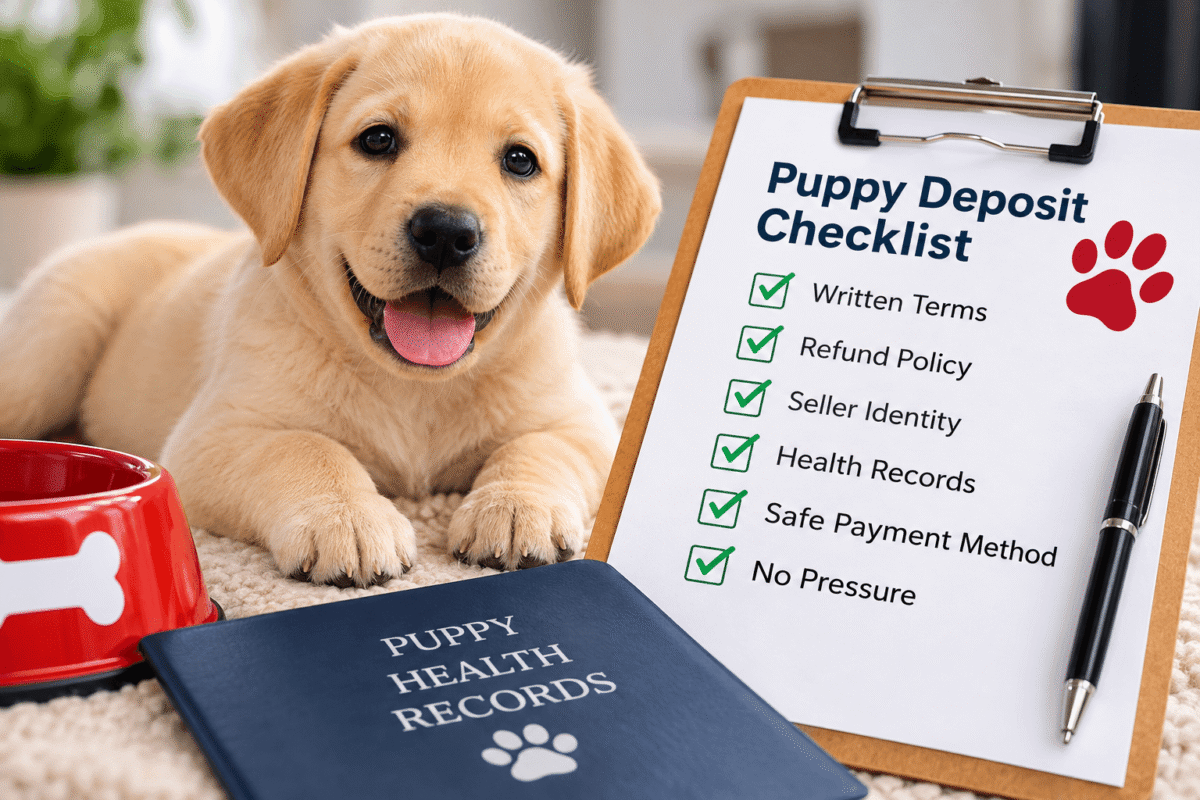
Short answer: What to check before paying a puppy deposit comes down to six things: the written terms, whether and when the deposit is refundable, who the seller really is, the puppy’s records, how you’re paying, and whether you feel pressured. If any of these is unclear, pause and ask questions before you send money.
ASK ABOUT A LAB PUPPY VIEW AVAILABLE PUPPIES
A deposit feels like a small step, but it’s often the first time money changes hands, and it’s where most puppy problems begin. Sellers who are open and organized make this easy. Sellers who rush you, avoid questions, or keep terms vague make it risky. This guide walks through what a deposit is, what the agreement should say, how to check that a seller is genuine, and the warning signs to watch for. It’s general information and not legal advice.
What Is a Puppy Deposit, and What Does It Reserve?
A puppy deposit, sometimes called a reservation fee, is a payment that holds a puppy for you until you complete the purchase. The name varies between sellers, and so do the rules, so never assume. Before you pay, find out exactly what the money reserves. It might be a specific puppy, a place in line for a future litter, or simply a hold for a limited time.
Ask whether the deposit is applied toward the final price or paid in addition to it, and when the remaining balance is due. These are basic questions, and a seller should be able to answer them clearly.
What Should a Puppy Deposit Agreement Say?
Get the terms in writing before you pay. Even a short written agreement is far better than a verbal promise or a text message that says “OK, you’re reserved.” Look for the following.
- The exact amount of the deposit, and the currency.
- Which puppy, or what place in line, it reserves.
- Whether the deposit is refundable, partly refundable, or not refundable, and under what conditions.
- How long the reservation is held, and the deadline for paying the balance.
- What happens if the puppy is no longer available.
- What happens if the puppy becomes ill or doesn’t pass a vet exam before pickup.
- What happens if you change your mind, and what happens if the seller does.
- How and when the puppy will be handed over or transported.
- The seller’s full name and contact details, and a receipt for your payment.
If the agreement is vague on any of these points, ask the seller to clarify in writing. A trustworthy seller won’t be bothered by it. For the full purchase, you should also read the contract and health guarantee, which we cover in our guide to Labrador puppy health records.
Is a Puppy Deposit Refundable?
It depends entirely on the seller, which is why the written terms matter so much. Some deposits are refundable, some are partly refundable, and some are not refundable at all. None of these is automatically wrong, but you need to know which one applies before you pay.
| Situation | Question to ask |
|---|---|
| You change your mind | Do I get any or all of the deposit back, and by when? |
| The puppy is sold or no longer available | Is the deposit refunded in full, or can I transfer it to another puppy? |
| The puppy gets sick before pickup | What are my options, and who decides? |
| A vet finds a problem | Can I get a refund or choose a different puppy? |
| Pickup or transport is delayed | How long can the delay be, and is the deposit still held? |
| The seller cancels | Is the deposit returned in full, and how quickly? |
If a seller says “the deposit is non-refundable” in a message but the written agreement says something else, go with the document and ask for the discrepancy to be fixed. Keep screenshots of the listing and any messages about refunds.
How Can You Check That the Seller Is Genuine?
Puppy scams are common, and fake listings often borrow real photos. A few quick checks make a big difference before you send any money.
- Ask for a live video call. A genuine seller can show you the puppy and its surroundings. Ask them to show the puppy doing something specific, like holding up a piece of paper with your name.
- Check the photos. A reverse image search can reveal whether photos appear on other sites under other names.
- Match names. The name on the payment account should match the seller’s name on the agreement and the listing.
- Look at the website and contact details. A working phone number, email, and a clear policy page are good signs. Look for consistent information across the site.
- Search the seller’s name and website. Look for reviews or complaints, keeping in mind that anyone can post a review.
- Ask for records. Genuine sellers can show vaccination, deworming, and parent health information. See our guide to finding a responsible Labrador breeder for what to expect.
If something doesn’t add up, trust that feeling. The Canadian Anti-Fraud Centre has information on how to recognize and report puppy scams.
Which Payment Method Is Safest for a Puppy Deposit?
Every method has trade-offs, and your bank or card provider can explain how each one handles disputes and refunds. As a general guide:
- Choose a method that creates a record, and keep the receipt or confirmation.
- Make sure the account name matches the seller’s name.
- Be careful with payments that are hard or impossible to reverse once sent, and ask your bank what protection you’d have.
- Avoid gift cards, cryptocurrency, and wire transfers to someone you can’t verify. These are common in scams.
- Be wary of any seller who insists on one specific method and refuses alternatives with no explanation.
What Records Should You See Before You Pay?
You shouldn’t have to hand over a deposit and hope for the best. Before paying, ask to see what exists so far: the puppy’s date of birth, the parents’ health testing information, and any veterinary records. Younger puppies may not have full records yet, so ask what’s planned and when. For a full breakdown of every document and what it means, read Labrador puppy health records: what should come with your puppy.
You can also read the terms of our own on the health guarantee page.
Red Flags Before You Pay a Deposit
- Pressure to pay right now because “someone else is interested.”
- The seller refuses a video call or sends the same photos over and over.
- The price is far below what similar puppies cost.
- No written agreement, or terms that change from message to message.
- Requests for payment by gift card, cryptocurrency, or wire transfer.
- The name on the payment doesn’t match the seller.
- Vague answers about the parents, the puppy’s age, or where it was raised.
- A puppy that’s offered at a very young age, before eight weeks.
- The seller gets angry or defensive when you ask questions.
A simple rule: if a seller won’t answer a reasonable question, or tries to rush you, wait. A good puppy will still be there after you’ve done your checks, and a good seller will understand.
What Are the Red Flags in a Puppy Itself?
When you see the puppy, in person or on video, look at the dog as well as the paperwork. Puppies are sleepy for much of the day, so one nap doesn’t mean there’s a problem, but watch for signs that something may be wrong.
- Lethargy or weakness when the puppy should be alert.
- Discharge from the eyes or nose, or frequent coughing or sneezing.
- Diarrhea, vomiting, or a swollen, hard belly.
- Limping, or difficulty standing or walking.
- A dull, patchy, or flaky coat, or a lot of scratching.
- Extreme fearfulness, or aggression that goes beyond normal play.
Normal puppy play includes mouthing, pouncing, and growling in play. It tends to look loose and bouncy. More concerning aggression can look stiff and tense, with a hard stare, snapping, or guarding food or toys. If you have any worries, ask your vet or a qualified trainer for advice before committing.
What If You Are Buying a Puppy You Haven’t Met?
Many families live far from the seller, and that can work well if you’re careful. Use video calls, ask for recent photos and videos, request the records, and read the agreement closely. Ask how the puppy will travel, who is responsible at each stage, and what happens if there’s a delay. Our shipping and delivery page explains how transportation works for puppies purchased from us.
If anything about the arrangement feels rushed or unclear, slow down. You can also run through our full Labrador puppy buying checklist before you decide.
What Happens After You Pay the Deposit?
Once you’ve reserved a puppy, use the waiting time well. Confirm the date and arrangements for pickup or transport, and ask how often the seller will send updates. Prepare your home with a crate or bed, food, chew toys, and a plan for the first night. Most puppies settle best in a quiet space close to you, with a regular routine for bathroom breaks.
Book a first vet visit for the first few days after your puppy comes home. Don’t take a young puppy to public places where other dogs have been until your vet says it’s safe, since vaccinations may not be complete. Short, calm visits to safe, private spaces are a good start for socializing.
Our Reservation Fee
A $400 CAD refundable reservation fee may be required to reserve an available puppy. Your reservation fee is refundable according to our reservation terms. Please review the reservation policy before making your payment. If you have any questions about how it works for a particular puppy, contact us first.
Frequently Asked Questions
What should I check before paying a deposit on a puppy?
Check the written terms, the refund conditions, the seller’s identity, the puppy’s records, the payment method, and whether you feel pressured. If any of these is unclear, ask questions before paying.
Is it normal to pay a deposit before getting a puppy?
Yes, many sellers ask for a deposit or reservation fee to hold a puppy. What matters is that the amount, purpose, and refund terms are clear and in writing before you pay.
What are the red flags when buying a puppy?
Pressure to pay quickly, no video call, a price far below normal, unclear paperwork, payment by gift card or crypto, and vague answers about the parents are all warning signs.
What should I ask a breeder before buying a puppy?
Ask about the puppy’s age, vaccination and deworming records, the parents’ health testing, how the puppies were raised, what the contract and health guarantee cover, and what happens if you can’t keep the dog.
Is 12 weeks too old to pick up a puppy?
No. Many puppies go home between eight and twelve weeks. An older puppy may already have started socialization and vaccinations, and with good care, they adjust well.
Can I leave my 8-week-old puppy alone for 3 hours?
That’s too long for most puppies this age. A rough guide is about one hour per month of age, so a young puppy usually needs a break every couple of hours during the day.
What is the 3-3-3 rule for puppies?
It’s a rough guide to settling in: about three days to feel overwhelmed, three weeks to learn the routine, and three months to feel at home. Every puppy is different, so be patient.
Where should a puppy sleep the first night?
Most do well in a crate or bed in a quiet spot near you, so they can hear you and you can hear them. Plan for a couple of bathroom breaks, since young puppies can’t hold it all night.
Can I take my 9-week-old puppy for a walk outside?
Ask your vet first. Until the vaccine series is complete, avoid public areas where other dogs have been. Short, supervised time in your own yard or other safe, private spaces is usually fine.
What is the hardest puppy stage?
Many owners find the teenage months, roughly six to eighteen months, the toughest. Puppies are strong and energetic but not yet mature. Consistent training and daily exercise help.
Have Questions Before You Reserve?
We’re happy to answer any question in this guide. Contact us to ask about a puppy, or browse our available Labrador puppies.
CONTACT US VIEW AVAILABLE PUPPIES
