

Short answer: This complete Labrador Retriever breed guide covers what owners most want to know. Labradors are friendly, intelligent, medium-to-large sporting dogs that need daily exercise, training, and company. They come in black, yellow, and chocolate, usually live around 10 to 12 years, and make excellent family pets for active households.
ASK ABOUT A LAB PUPPY VIEW AVAILABLE PUPPIES
The Labrador Retriever has been one of the most popular dogs in the world for decades, and it’s easy to see why. They’re affectionate, eager to please, and happy to take part in almost anything their family does. They’re also big, strong, and full of energy, which surprises some first-time owners. This guide explains the breed from history to health, so you can decide whether a Lab fits your life. It is general information, and your veterinarian is the best source of advice for your own dog.
Labrador Retriever at a Glance
| Breed group | Sporting (gundog and retriever) |
|---|---|
| Height | Roughly 21.5 to 24.5 inches (55 to 62 cm) at the shoulder |
| Weight | Roughly 55 to 80 pounds (25 to 36 kg), with males usually larger |
| Coat | Short, dense, water-resistant double coat |
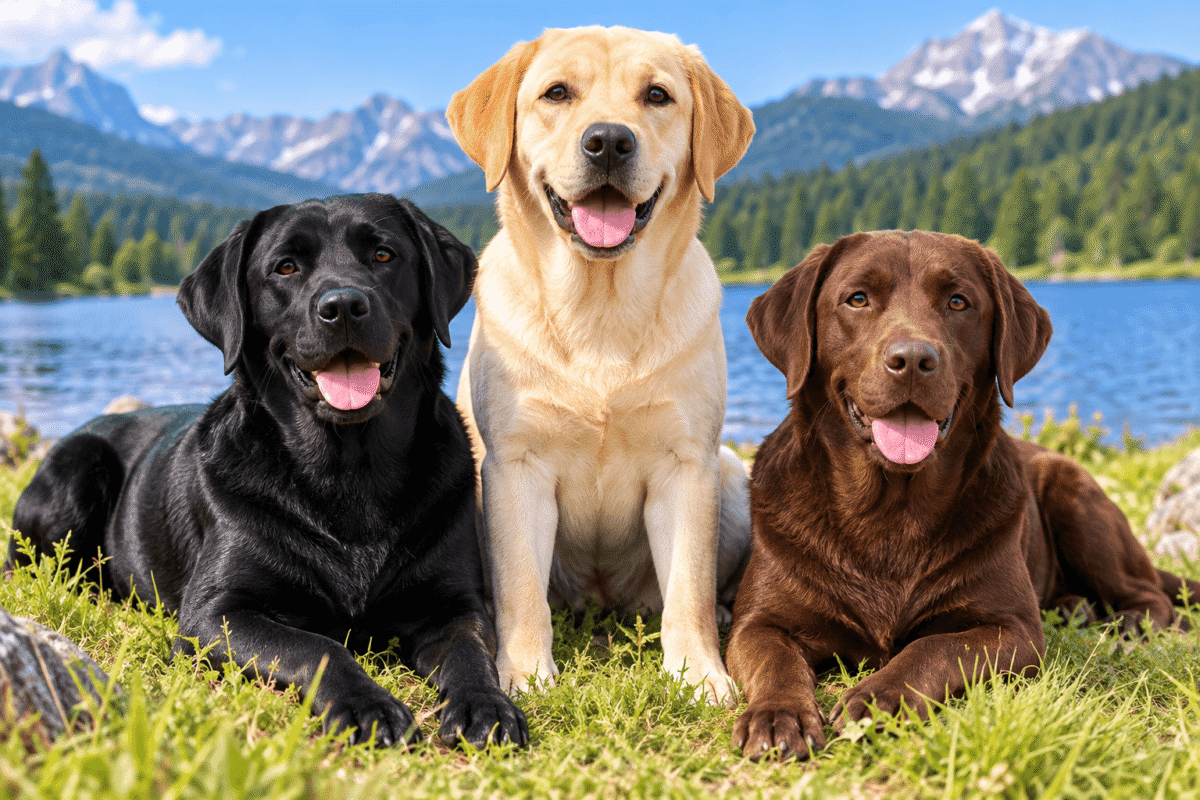
| Colours | Black, yellow, and chocolate |
| Temperament | Friendly, outgoing, intelligent, eager to please |
| Exercise | High: an hour or more daily for adults |
| Shedding | Regular, heavier in spring and fall |
| Typical lifespan | Commonly around 10 to 12 years |
Where Do Labrador Retrievers Come From?
Despite the name, the Labrador’s roots are in Newfoundland, not the Labrador region. The breed traces back to a hardworking local water dog, sometimes called the St. John’s water dog, which helped fishermen haul nets and retrieve fish that escaped the line. English visitors admired these dogs, took some home, and in the 1800s breeders there refined them into the gundogs we know today, prized for retrieving birds from land and water.
That working history explains a lot about the modern Lab: the love of water, the soft mouth, the strong desire to carry things, and the stamina to keep going all day. Even pet Labs often keep those instincts, which is why many will carry a toy to greet you at the door.
What Does a True Labrador Look Like?
Labs are strongly built but not clumsy. Typical features include a broad skull, a kind and intelligent expression, medium-sized hanging ears, a deep chest, and a thick, tapering tail often called an “otter tail.” The coat is short and dense with a weather-resistant undercoat, and the feet are slightly webbed, which helps in the water. The American Kennel Club’s Labrador page gives a good summary of the breed standard.
Coat colours
Black, yellow, and chocolate are the three standard colours. Yellow covers a wide range, from pale cream to deep fox red, and colour doesn’t make one Lab better than another. If you’d like to see each shade, we have pages on black, yellow, chocolate, fox red, white, and silver Labradors. Be aware that “silver” and “charcoal” are not standard colours, and colour alone should never decide the price of a puppy.
What Are the Different Types of Labradors?
People often ask how many types of Labrador there are. There is only one Labrador Retriever breed. However, owners and breeders often talk about two general types, English and American, which are informal terms and not separate breeds.
| Feature | English-type Lab | American-type Lab |
|---|---|---|
| Build | Stockier, heavier frame | Taller, leaner, more athletic |
| Head | Broader, blockier | Narrower, with a longer muzzle |
| Energy | Often a bit more laid-back | Often higher energy and drive |
| Often bred for | Show ring and companionship | Field work and hunting |
These are general tendencies, and plenty of Labs fall in between. Neither type is “best.” The right choice depends on your lifestyle. A very active family might enjoy a high-drive Lab, while a quieter household might prefer a calmer one. Ask about the puppy’s parents, because their build and temperament tell you more than any label.
What Is a Labrador’s Temperament Like?
Labs are known for being friendly, outgoing, and good-natured. They tend to love people, including strangers, which makes them poor guard dogs but wonderful companions. They are playful well into adulthood, and many stay puppyish for two or three years.
Signs of a happy Lab
- A loose, wiggly body and a tail that wags the whole back end.
- Soft eyes and relaxed ears.
- A play bow, bouncy movement, and eagerness to join in.
- A good appetite and healthy sleep.
- Bringing you toys or leaning against you for attention.
Are male or female Labs easier, calmer, or more cuddly?
There’s no reliable rule. Males are often a little larger, but personality varies far more between individuals than between the sexes. Calmness depends on age, training, exercise, and the puppy’s parents. Many Labs enjoy sleeping near their owners, but that’s more about habit and household rules than about the breed.
Are Labradors Good Family Dogs?
Often, yes. Labs are affectionate, patient, and enjoy being part of a busy household. They usually do well with children and other pets when properly trained and socialized. But “good with families” doesn’t mean “low maintenance.” A young Lab is strong, bouncy, and mouthy, and can knock over small children without meaning to. Supervise interactions, and teach children how to treat a dog respectfully.
Labs are best suited to people who enjoy being outdoors and are willing to spend time on training and exercise every day. They may not be the right choice for someone who is away for long hours or wants a calm, low-activity pet. Our Labrador puppy buying checklist helps you decide honestly.
How Easy Are Labradors to Train?
Labs are intelligent and eager to please, which makes them one of the easier breeds to train. They respond best to positive reinforcement: praise, treats, and play for good behaviour. They also learn bad habits quickly if they get attention for them, so consistency matters.
- Start training the day your puppy comes home.
- Keep sessions short, fun, and frequent.
- Socialize your puppy to people, sounds, and places in the first few months.
- Teach basics early: sit, down, come, and walking on a leash.
- Redirect chewing and mouthing to appropriate toys.
Their intelligence and willingness to work are why Labs are so often used as guide dogs, detection dogs, search-and-rescue dogs, and therapy dogs.
How Much Exercise Does a Labrador Need?
Plenty. Most adult Labs need an hour or more of activity a day, such as walks, fetch, swimming, or training games. Mental exercise matters too, since a bored Lab can get destructive.
The 5-minute rule for puppies
A common guide for puppies is about five minutes of structured exercise for each month of age, twice a day. It helps protect young joints. Avoid hard, repetitive exercise, like long runs on pavement, while a puppy is still growing.
How far is too far to walk a Lab?
There’s no single answer. A fit adult Lab can often walk a long way, but it depends on age, fitness, weather, and health. Build up gradually, carry water, avoid hot weather, and watch for signs of tiredness such as slowing down, lagging behind, or heavy panting.
Can a Lab be left alone for 8 hours?
It isn’t ideal. Labs are social, and long stretches alone can lead to boredom, anxiety, or destructive behaviour. Puppies need much more frequent breaks. If your schedule is long, plan for a midday visit, a dog walker, or daycare.
Grooming and Shedding
Labs have a short coat that’s easy to care for, but they shed a lot, all year, with heavier shedding in spring and fall. Brush weekly, and more often in shedding season. Bathe only when needed, usually every few months. Clean and dry the ears, especially after swimming, trim nails, and brush teeth regularly. Expect dog hair on clothes and furniture.
Feeding and Weight Control
Labs love food, and many will eat until they’re sick. Obesity is one of the most common problems in the breed, and it puts strain on joints and shortens lives. Measure meals, limit treats, and ask your vet which food and portions suit your dog’s age and activity level. A healthy Lab has a visible waist and ribs you can feel but not see.
Labrador Health and Lifespan
Labs are generally sturdy, but like all breeds they’re prone to certain conditions.
- Hip and elbow dysplasia: inherited joint problems that can cause lameness and arthritis.
- Obesity: very common and largely preventable.
- Ear infections and skin allergies: floppy ears and swimming make them common.
- Inherited eye conditions: including progressive retinal atrophy.
- Exercise-induced collapse and centronuclear myopathy: inherited conditions with available DNA tests.
- Cancer and age-related joint disease: more common in older dogs.
Labradors commonly live around 10 to 12 years. No Lab type or colour is proven to live the longest, although some research has suggested chocolate Labs may have a somewhat shorter average lifespan. Good breeding, a healthy weight, regular exercise, and routine veterinary care make the biggest difference. Responsible breeders screen the parent dogs for inherited conditions, and you can learn what to ask for in our guide to Labrador puppy health records.
How Do You Know if a Labrador Is Full Breed?
Looks alone can’t tell you. Many mixed dogs resemble Labs, and some purebred Labs look a little different from the standard. The most reliable evidence is registration papers and a pedigree that show both parents and their ancestry. A DNA breed test can also give an indication, and your vet can advise on one.
What about Labrador mixes?
Labrador crosses, such as Labradoodles and Golden Retriever mixes, are popular, but there isn’t a “best mix.” Mixed puppies can inherit any combination of traits from either parent, so size, coat, and temperament are less predictable. If predictable breed traits matter to you, a Labrador Retriever from known, health-tested parents gives you a clearer picture.
What Should You Know Before Buying a Labrador Puppy?
Choosing the seller matters more than choosing a colour or a type. Take your time, ask for health records and parent testing information, read the contract, and never pay before you’ve seen the puppy on a live video call. Our guide to finding a responsible Labrador breeder explains what to look for, and you can see what we currently have on our available puppies page.
Frequently Asked Questions
Is a Labrador a good breed?
For the right household, yes. Labs are friendly, trainable, and versatile, but they need daily exercise, training, and company. They’re a great match for active families and a poor match for people who want a low-effort pet.
Which type of Labrador is best?
Neither English nor American type is best. It depends on your lifestyle. English-type dogs are often a little calmer and stockier, while American-type dogs are often leaner and higher-energy. Always meet the puppy’s parents or ask about their temperament.
What is the calmest Lab?
Calmness varies by individual. Age, training, exercise, and the parents’ temperament matter most. Many Labs begin to settle between two and three years old.
Which color Labrador is most expensive?
None should be, simply because of colour. Black, yellow, and chocolate are all standard. Be cautious of sellers who charge extra for a “rare” colour, and ask what the price includes.
Do Labs like to sleep with their owners?
Many do, because they’re people-focused dogs who like to be close. Whether your Lab sleeps in your room, in a crate, or in your bed is up to your household rules and routine.
What is the leading cause of death in Labs?
It varies from dog to dog. Cancer and age-related joint and mobility problems are among the major health concerns in the breed. Keeping your Lab at a healthy weight and seeing your vet regularly helps.
What dog breeds make up a Lab?
The Labrador Retriever is its own breed, developed from working water dogs in Newfoundland and refined in England. It isn’t a mix of other modern breeds.
How long do Labs live?
Labrador Retrievers commonly live around 10 to 12 years, with good breeding, a healthy weight, exercise, and regular veterinary care all playing a part.
Thinking About a Labrador Puppy?
We’re happy to answer your questions about the breed or a particular puppy. Contact us to ask, learn more about us, or browse our available Labrador puppies.
CONTACT US VIEW AVAILABLE PUPPIES
