

Short answer: Labrador coat colours come in three standard shades: black, yellow, and chocolate. Yellow ranges from pale cream to deep fox red. Other shades you may see advertised, such as silver, charcoal, and champagne, are not standard colours. Colour does not make one Labrador better, healthier, or more valuable than another.
ASK ABOUT A LAB PUPPY VIEW AVAILABLE PUPPIES
Few things spark as many questions among Lab buyers as colour. Which one is rarest? Which is calmest? Is a chocolate Lab worth more than a black one? Are silver Labs real? This guide answers those questions plainly. It explains the standard Labrador Retriever coat colours, how coat colour genetics work, what’s marketing and what’s fact, and how to choose a puppy based on the dog instead of the shade. It is general information, and your vet is the best source of advice for your own dog.
What Are the Labrador Coat Colours?
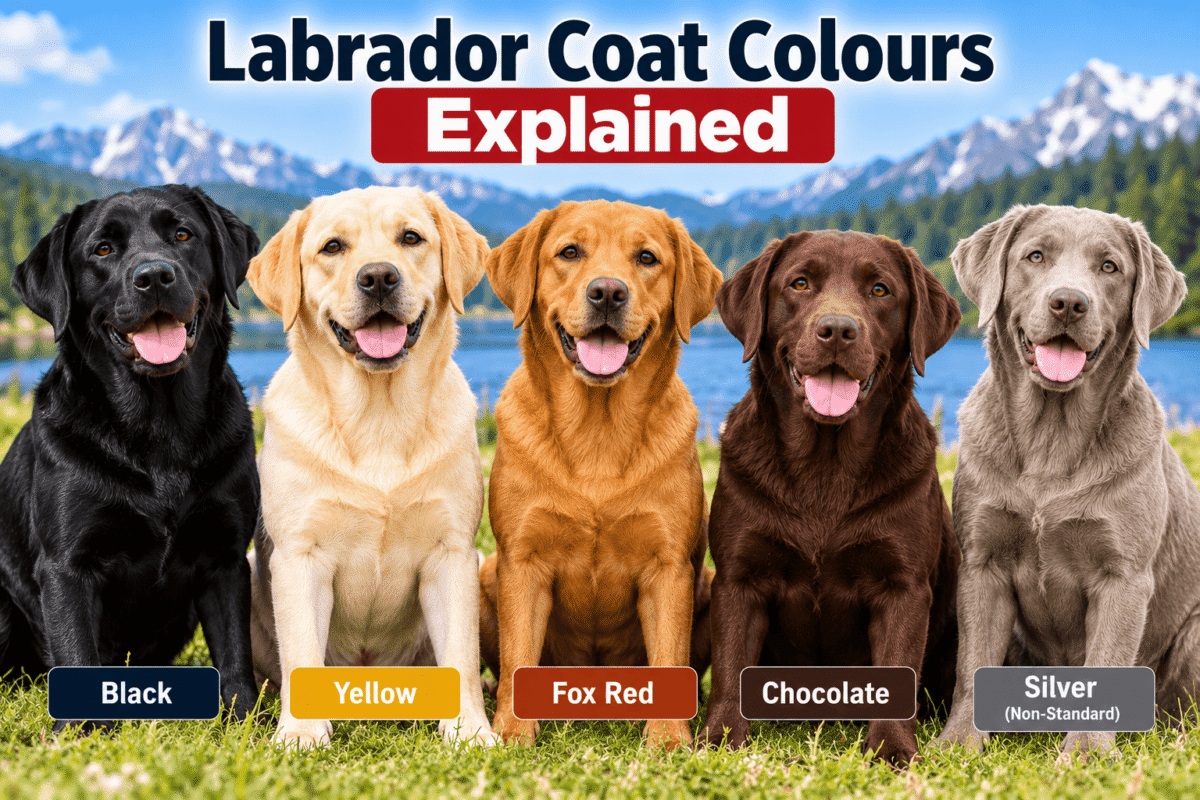
The Labrador Retriever breed standard recognizes three colours: black, yellow, and chocolate. The American Kennel Club’s Labrador page describes them, and other kennel clubs follow similar standards. Here is a quick guide.
Labrador Retriever coat colours chart
| Colour | What it looks like | Nose and eye rims | Standard? |
|---|---|---|---|
| Black | Solid, glossy black | Black | Yes |
| Yellow | Pale cream to golden to deep red | Usually black, sometimes brown | Yes |
| Fox red | Deep, rich red; a shade of yellow | Usually black | Yes, as a yellow shade |
| Chocolate | Warm brown, from light to dark | Brown | Yes |
| Silver, charcoal, champagne | Greyish, muted versions of other colours | Varies | No |
Black Labradors
Black is the most common Labrador colour and the one many people picture first. A true black Lab has a solid, glossy coat with black nose, lips, and eye rims. A small white patch on the chest is allowed under the breed standard, but other markings are not.
Because black Labs are so common, there’s no reason to pay extra for the colour. They are also the colour most often seen in working roles like service and detection work, though that reflects numbers more than ability. If you’d like to see what they look like, visit our black Lab puppies page.
Yellow Labradors (Including Fox Red and Cream)
Yellow is a broad colour. It covers everything from very pale cream, sometimes called “white,” through golden and butterscotch, to a deep reddish shade known as fox red. All of these are yellow Labs. The shade isn’t a separate colour or breed, and dogs from the same litter can differ.
- Pale cream: often called a “white Lab,” but it’s a very light yellow. See our white Labrador page.
- Golden yellow: the shade most people associate with a yellow Lab. See our yellow Lab puppies.
- Fox red: a rich, deep red-yellow. See our fox red Lab puppies.
Yellow puppies often darken a little as they mature, especially along the ears and back, so a very pale puppy may not stay that pale.
Chocolate Labradors
Chocolate Labs have a solid brown coat that can range from a light milk-chocolate to a deep, dark brown. Their nose, lips, and eye rims are brown to match. Many have amber or hazel eyes, though brown is common too.
Chocolate is less common than black or yellow, but it’s well established. Brown Labradors aren’t rare, and a brown Lab shouldn’t cost more simply because of its colour. See our chocolate Lab puppies page for more.
Are Silver, Charcoal, and Champagne Labradors Real?
Silver, charcoal, and champagne Labs are real dogs with a diluted coat, and they are not standard Labrador colours. They are produced by a dilution gene that lightens a base colour: chocolate becomes silver, black becomes charcoal, and yellow becomes champagne. Some kennel clubs and registries treat them differently from each other, and policies can change, so check directly if registration matters to you.
Dilute coats can also come with health questions, such as a skin and coat condition called colour dilution alopecia in some dogs. It doesn’t affect every dilute-coated Lab. Read more on our silver Lab puppies page.
Other unusual coats
- Dudley Labs: yellow Labs with little or no pigment on the nose, lips, and eye rims, which look pink. This is cosmetic, but a thoroughly pink nose is penalized under the breed standard.
- Brindle or tan-point patterns: not part of the standard and often a sign of mixed ancestry.
- Long-haired Labs: the standard calls for a short, dense coat. A longer, fluffy coat can appear occasionally and may reflect mixed ancestry or a recessive trait. A DNA test can help if you’re unsure.
How Does Labrador Coat Colour Genetics Work?
Labrador coat colours come mainly from two genes working together, plus a third that can dilute the result.
| Gene | What it does | Result |
|---|---|---|
| B gene | Decides whether a dog’s dark pigment is black or brown | Black or chocolate |
| E gene | Decides whether dark pigment shows in the coat at all | If the dog inherits two recessive copies, the coat is yellow, whatever the B gene says |
| D gene | Can dilute the base colour | Two copies produce silver, charcoal, or champagne |
Each puppy inherits one copy of each gene from each parent, so the same two parents can produce puppies of different colours. Two black parents, for example, can have a yellow or chocolate puppy if each carries the right hidden copies. DNA tests can show which colour genes a dog carries. Colour is only one result of genetics, and it says nothing about a dog’s health or temperament.
Do Labrador Coat Colours Change as Puppies Grow?
Sometimes a little. Black puppies usually stay black, though a sun-faded coat can look browner. Chocolate puppies can lighten or deepen slightly. Yellow puppies often darken, especially on the ears and back. A very pale yellow puppy may end up a richer cream or gold. Adult photos of the parents give you the best idea of the shade to expect.
Does Coat Colour Affect Temperament, Health, or Price?
Temperament
Colour doesn’t determine personality. Some people believe black Labs are more energetic or that chocolate Labs are more excitable, and a few small studies have looked at it, but the evidence is limited and mixed. Training, socialization, exercise, and the parents’ temperament matter far more. If you’re asking which colour is the calmest, the honest answer is that it depends on the individual dog.
Health
Colour is not a reliable guide to health either. Some research has suggested that chocolate Labs may have a somewhat shorter average lifespan and be more prone to ear and skin problems, and dilute coats can carry skin concerns. These findings don’t mean any individual dog will have problems. Responsible breeding and parent health testing matter most. See our guide to Labrador puppy health records for what to ask.
Price
No colour should cost more simply because of its shade. Be careful with sellers who charge extra for a “rare” colour. A fair price reflects things like health testing, veterinary care, records, and the terms of the sale. If you want to know what a price includes, ask. Our guide to finding a responsible Labrador breeder explains what to check.
What Is the Rarest Labrador Colour?
Among the standard colours, chocolate is the least common, though it’s far from rare. Silver, charcoal, and champagne are less common still, but they aren’t standard, and “rare” doesn’t mean “better.” Rarity is often used to justify high prices, so treat it as a reason to ask more questions and not fewer.
How Can You Check a Seller’s Colour Claims?
Colour is easy to exaggerate in a listing, so it helps to know what to ask when a puppy is described as something special.
- Ask for the parents’ colours. A seller should be able to say what colours the mother and father are, and show photos.
- Ask what a “rare” label is based on. If a colour is described as unusual, ask whether it’s a standard colour, a dilute shade, or just a marketing term.
- Ask about DNA colour testing. Some breeders test for the colour genes. If they say they have, ask to see the results.
- Check the paperwork. If a puppy is sold as registered, the colour on the papers should match what you were told.
- Compare more than colour. Look at health testing, records, and terms between sellers, since those affect the dog far more than its shade.
A trustworthy seller is happy to explain, and doesn’t use colour as a reason to rush you or raise the price.
Which Labrador Colour Is Right for You?
Choose the seller and the puppy first, and the colour last. If you have a preference, here are a few honest considerations:
- Shedding and dirt: all Labs shed. Light coats show dark dirt and hair, and dark coats show light hair, so no colour is low-maintenance.
- Heat: dark coats absorb more sun, so offer shade and water on hot days.
- Type matters more than colour: a dog’s build and energy depend on its lines. See our guide to English vs. American Labs.
- The puppy’s parents: their health, temperament, and records tell you far more than their colour.
For the full picture of the breed, read our complete Labrador Retriever breed guide, and see what we have on our available puppies page.
Frequently Asked Questions
What is the rarest colour of Labrador?
Silver, charcoal, and champagne are the least common, followed by chocolate among the standard colours. Rarity doesn’t mean higher quality, and it shouldn’t be used to justify a high price.
What is the most expensive Labrador colour?
No colour should be, purely for its shade. Black, yellow, and chocolate are all standard. Ask what a price includes, such as health testing, records, and guarantees.
Are brown Labradors rare?
No. Chocolate Labs are less common than black or yellow but are well established. A brown Lab shouldn’t cost more simply because of its colour.
How much does a brown Labrador cost?
It depends on the individual puppy and what’s included, so check the listing or contact the seller for current details. Colour on its own isn’t a good reason for a higher price.
Are red Labs expensive?
Fox red Labs are yellow Labs in a deeper shade, and the shade alone shouldn’t raise the price. Compare health testing, records, and terms between sellers instead.
What are the differences between yellow, chocolate, and black Labradors?
Mainly colour. All three are the same breed with the same general temperament and build. Individual personality, training, and breeding lines matter far more than coat colour.
Which colour Labrador is the calmest?
No colour is reliably calmer. Age, exercise, training, and the parents’ temperaments matter most. Many Labs begin to settle between two and three years old.
Are black Labs more energetic?
Not reliably. Energy depends on the dog’s lines, age, and exercise, not on its colour.
What are the two types of Labradors?
People often talk about English and American types, which differ mainly in build and energy. They are informal types within one breed, not colours. Read English vs. American Labs for more.
How can I identify a pure Labrador?
Looks alone can’t tell you. Registration papers and a pedigree show a dog’s parentage, and a DNA breed test can give an indication. See our breed guide for more.
Are there long-haired Labrador Retrievers?
The standard calls for a short, dense coat. A longer, fluffy coat sometimes appears and may reflect mixed ancestry or a recessive trait. A DNA test can help if you’re curious.
What are Labradors best at?
Retrieving, of course, along with guide and service work, detection, search and rescue, and therapy. Their intelligence, friendliness, and eagerness to please make them very versatile.
Found a Colour You Love?
We’re happy to answer questions about any of our puppies. Contact us to ask, or browse our available Labrador puppies.
CONTACT US VIEW AVAILABLE PUPPIES
